Key takeaways
- Mold needs moisture, a food source such as wood, and time.
- Air from the crawl space can reach the living space above.
- Cleaning without fixing moisture usually fails.
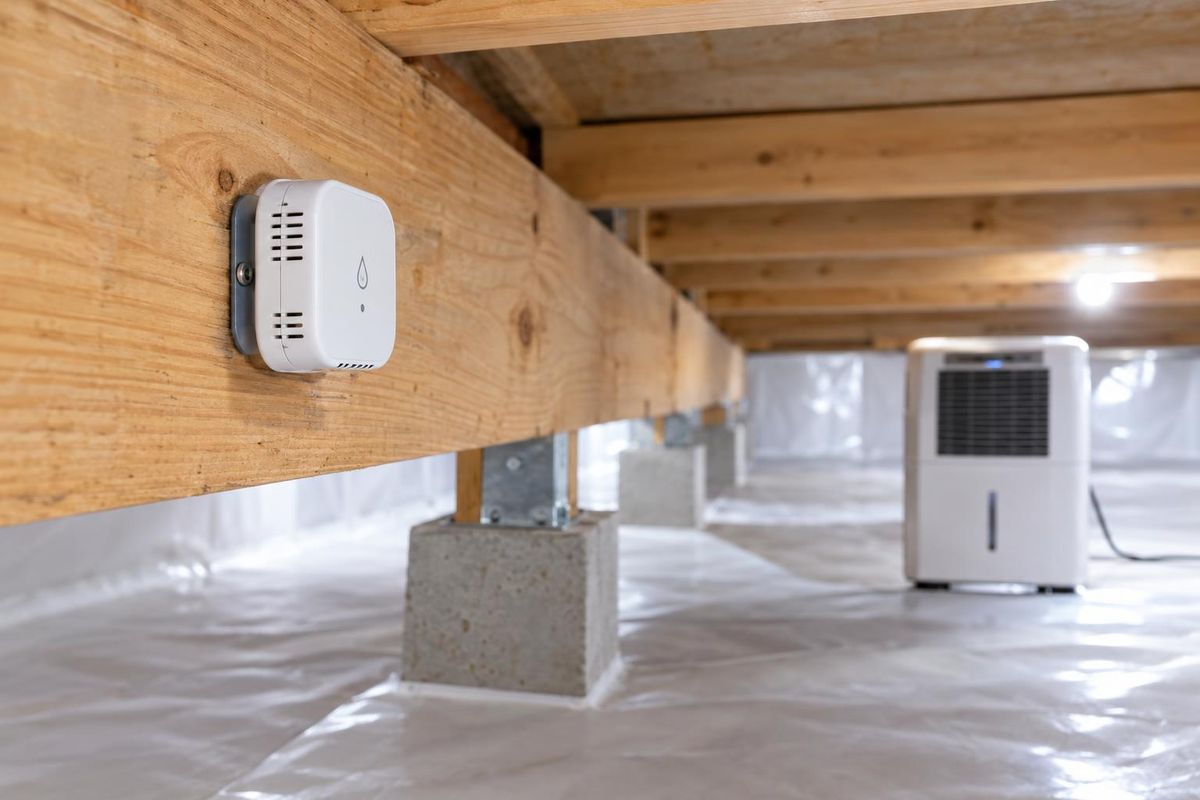
- Testing and moisture readings help you choose a sensible plan.
Why mold grows under a house
Mold spores are everywhere. They grow when they land on a damp surface that stays damp for a few days, and the wood and paper-faced insulation in a crawl space are ideal food.
Humid summers, wet soil and leaks give them what they need.
What to look for
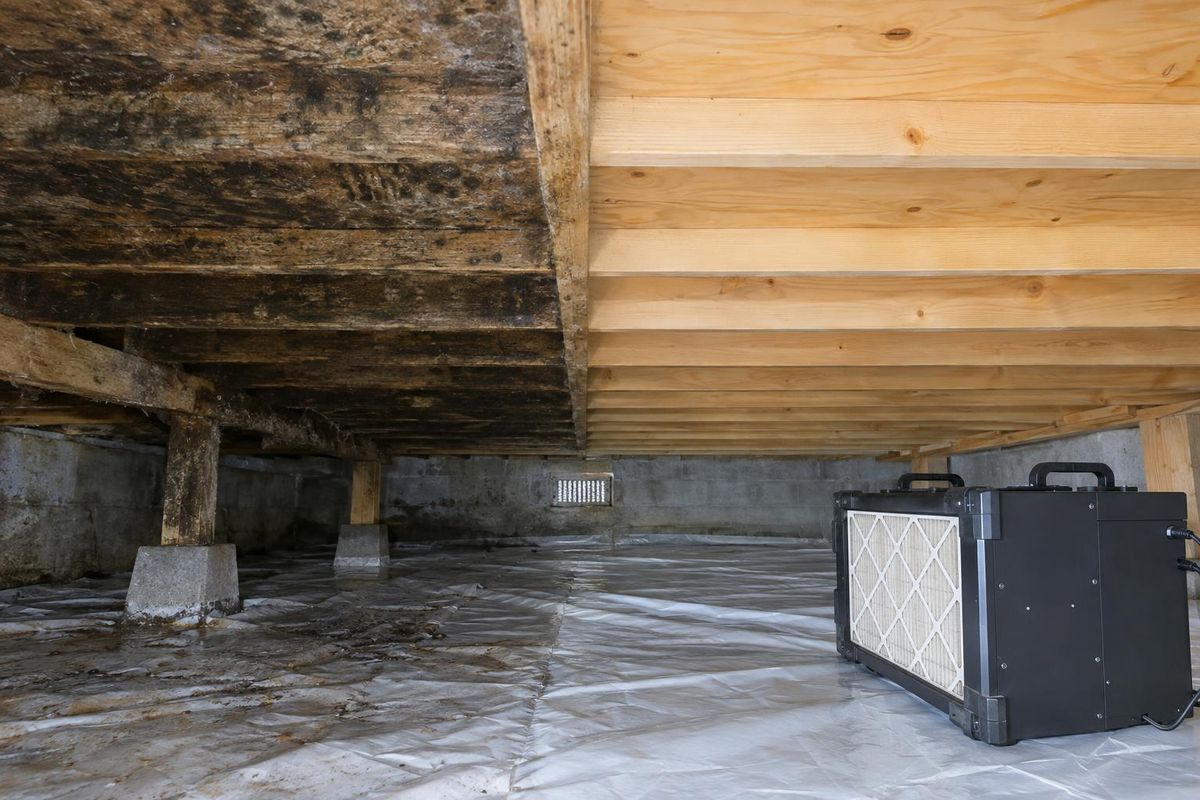
Fuzzy or spotted growth on joists and subfloor, dark staining, a musty odor and insulation that is wet or discolored are all signs. Mold can be white, green, gray or black, and color alone does not tell you what it is.
Not every dark stain is active mold, which is one reason measurement and sampling can help.
How mold affects a home
Air moves from the crawl space into the house through gaps and ducts, so mold and musty air below can show up above. People react differently, and some are more sensitive than others.
Left alone, mold can also damage wood over time.
What actually fixes it
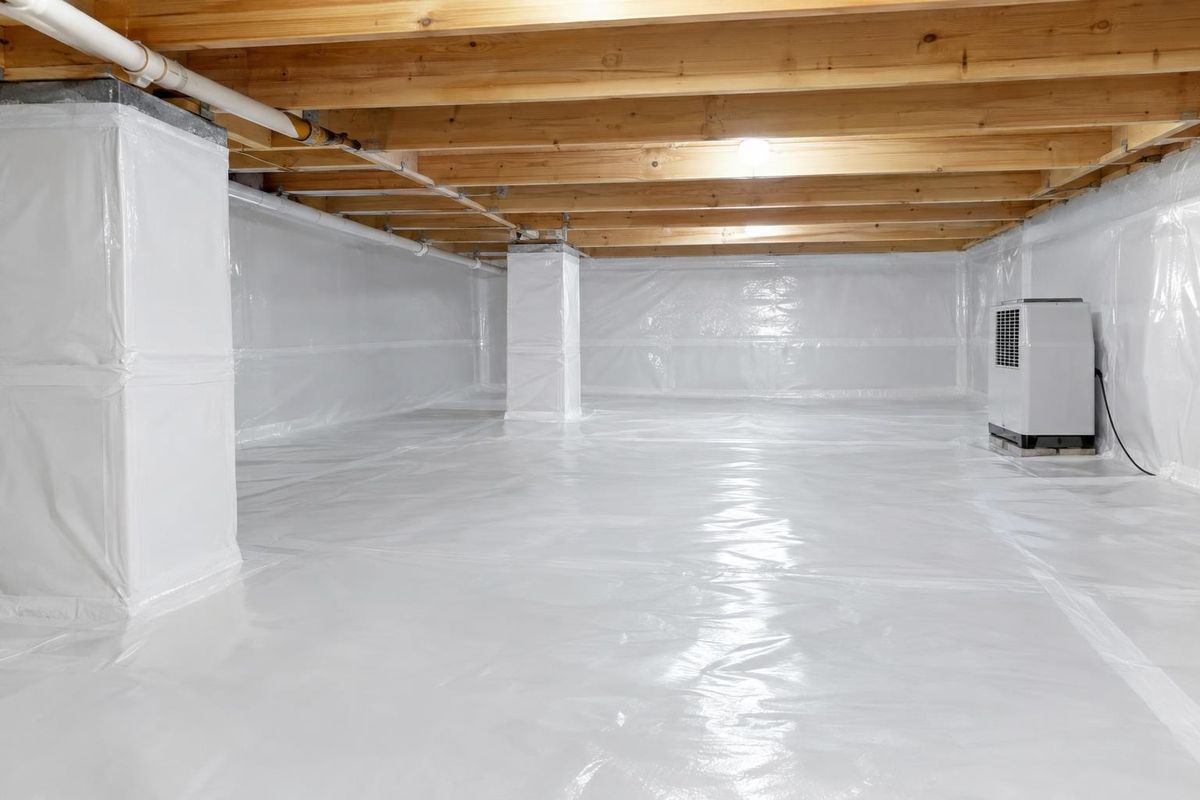
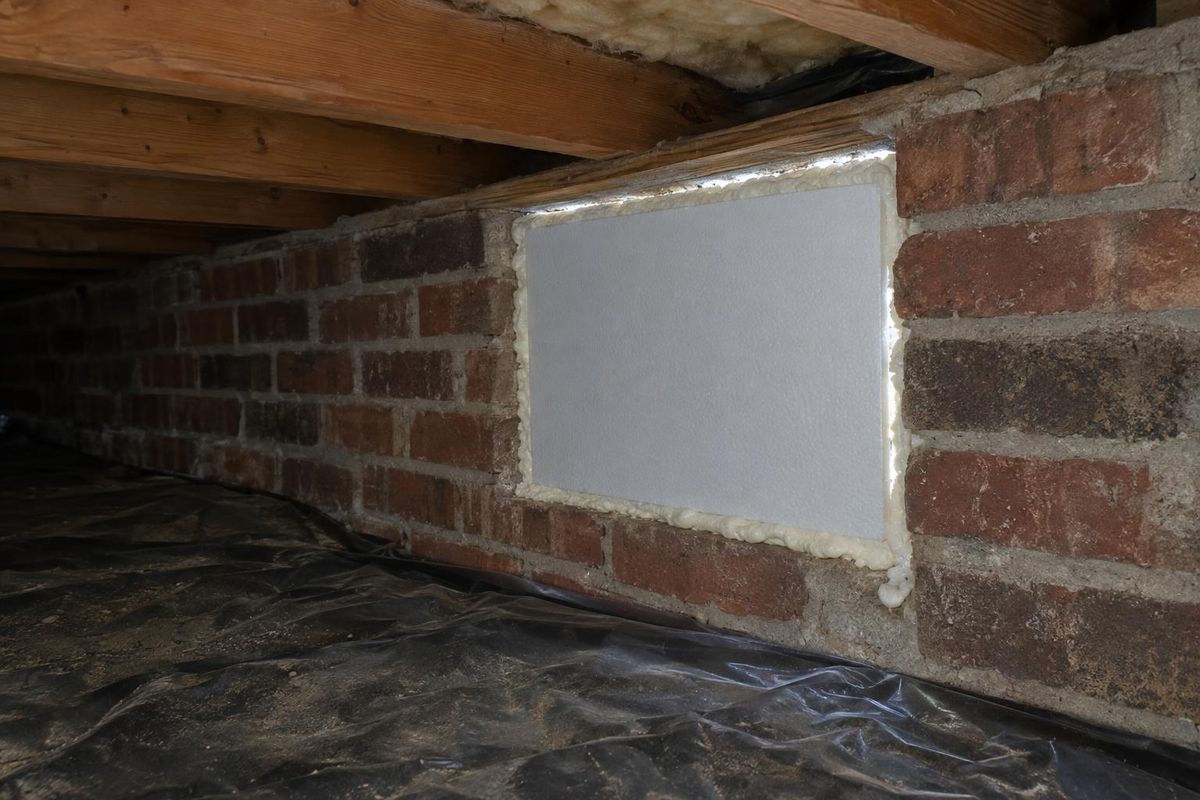
Cleanup with HEPA vacuums and approved treatments, removal of materials that cannot be cleaned and, above all, correcting the moisture that caused it. A sealed, dry crawl space is far less likely to grow mold again.
Bleach is not recommended for wood, which is porous, and spraying without fixing moisture tends to be a temporary fix.
Quick answers
Should I test for mold?
If you can see it, testing may not be necessary. If you smell it but cannot find it, testing can help locate the problem.
Can I clean mold myself?
Small areas can sometimes be cleaned, with protective gear. Larger areas deserve a professional approach, including containment.
Will mold return after cleaning?
It can if moisture comes back, so fix the cause as part of the cleanup.